openSUSE Board on Participation, Governance and Community
12. Feb 2026 | Lubos Kocman | CC-BY-SA-3.0
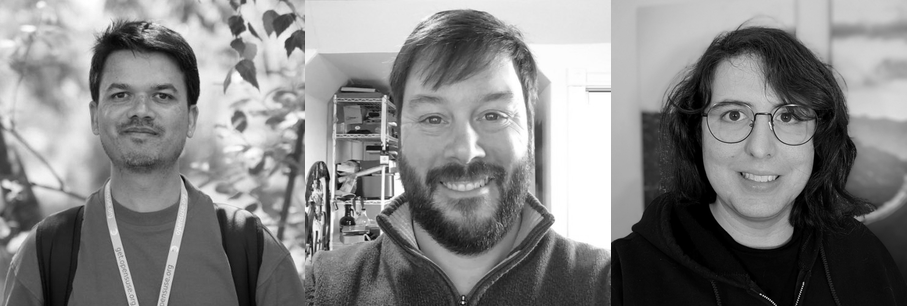
With the 2026 openSUSE community Board elections coming up, Ish Sookun, Jeff Mahoney and Rachel Schrader are the board members elected last election and having another year in the role. We sat down with them and asked them some questions.
1. What does the Board do?
Jeff On paper, the Board leads the openSUSE project. That sounds like a grand responsibility but in practice, it’s much more focused and limited. The Board isn’t involved in any of the Project releases or in managing the infrastructure of the project. It’s the point of contact for external people needing to reach the project. It helps resolve conflicts. It handles potential legal issues around trademarks and such. It provides guidance when needed.
Rachel From my experience so far, the board only acts as a subset of the community of openSUSE as a whole. We handle a few things, such as final decisions of moderation actions, being a line of contact with SUSE, and, in many ways, provide guidance to other groups with the community.
2. What motivated you to step up and run for the Board?
Jeff The Board election in 2024 had few people step up to run for the open seats, so I figured I might as well volunteer. I’d been a part of the community for many years and had some ideas I wanted to propose. The project was in need of volunteers, so I stepped up.
Ish Yes, I stepped up after a second call. When Lubos reached out to me saying he would like to nominate me, it immediately struck to me as something to be honoured about. I am really grateful to him for the nomination and to Johannes Segitz for seconding the nomination.
Rachel During this last election there were not many people looking to volunteer for the board., I was encouraged by a few other active members from the project to join.
3. Tell us about a challenge the Board faced during your tenure.
Jeff There’s a fine line between promoting a healthy community that avoids toxic behavior and being overbearing and intrusive. Some of the issues that come before the board are simple to weigh. Others have context full of personal history, communication style differences, and nuance. Finding the right balance in those cases can be challenging.
Ish While I knew that Board members had to regularly meet (virtually) and discuss about the project, I didn’t realize how much of non-technical matters would be at the table. For example, issues relating to “moderation” is something that I consider challenging as it requires understanding the history of events, code of conduct, etc. It is one thing that I look up to other senior Board members to properly understand the context of events.
Rachel The most up-front and annoying challenge is trying to find a time and day for everyone to meet. We have members throughout the world, and some of us have to be up at 6:00 in the morning while others are joining at 23:00 at night. Either way, it is overall a good thing when we all make it and are productive.
4. What do you recommend to someone who is considering standing for election?
Jeff Do it because you’re interested in the health of the project and want to influence some positive change. Even if you’ve been a long-time contributor, you’ll need to tell people about yourself, your contributions, and your ideas. While the election isn’t a popularity contest, the folks voting need to know who you are. The time commitment isn’t huge and you’d be doing a service for the health of the project.
Rachel It’s important to have some level of online profile to show others where your skill sets lie, what your goals are, and anything else important to you. For the parts that are relevant to openSUSE itself, you can create a page on the wiki, which I think is important to have and share with others. I think keeping in contact with the community is needed. It’s one thing to be pushing out packages and commits on the back end, but to really make a connection to the community, you should be active and talking/helping people on our different platforms like Matrix or even Discord.
5. How can openSUSE members prepare for the upcoming elections, whether as voters or as potential candidates?
Jeff Read articles like this one. Find topics that are important to you. Ask questions. If you’re unsure about running for a Board seat, ask yourself, “why not me?”
6. Is there anything else you would like to add?
Jeff The Board isn’t the only, or even the best, way to contribute to openSUSE. Contributors, both technical and non-technical, are the beating heart of the project and the community. There are many ways to contribute without sitting on the Board, but the project needs committed people to sit on the Board to keep it healthy.
Rachel The board does not exist as gatekeepers or the ones that you must get approval from as a project member when wanting to make a positive change or create something new. It’s important for everyone to know that it’s everyday project members who have built openSUSE, and they are the ones building things up from the ground. Serving on the board itself can be a great way to help the project, but in reality, the most important people who make openSUSE what it is are everyday members.
openSUSE is built by people who genuinely care about the project, and the next election cycle needs members to participate in the governance and to assist election officials. If you are interested in being a candidate or helping election officials, please email board@opensuse.org.
Questions were prepared by Luboš Kocman and Douglas DeMaio. Post-processing and formatting were done by Gertjan Lettink.